Buying Guide / 6 min read
The Simplest Way to Build a Balanced Aquarium Ecosystem
A beginner-friendly guide to building a simple freshwater aquarium ecosystem with plants, filtration, compatible fish, and a practical care routine.
Article
The Simplest Way to Build a Balanced Aquarium Ecosystem
A simple aquarium ecosystem is not a sealed jar that runs by itself. It is a practical setup where plants, beneficial bacteria, filtration, light, and regular care work together. The goal is a calm, stable tank that is easy for a beginner to understand and maintain.
Start With the Right Size
For a first freshwater tank, a larger aquarium is usually easier to keep steady than a tiny bowl. More water changes temperature and water quality more slowly. Choose a tank with a lid, a gentle filter, a heater if your fish species needs warmer water, a thermometer, and a light with a timer. Place the aquarium on a level surface away from direct sun and heating or cooling vents.
Build the Base Layer
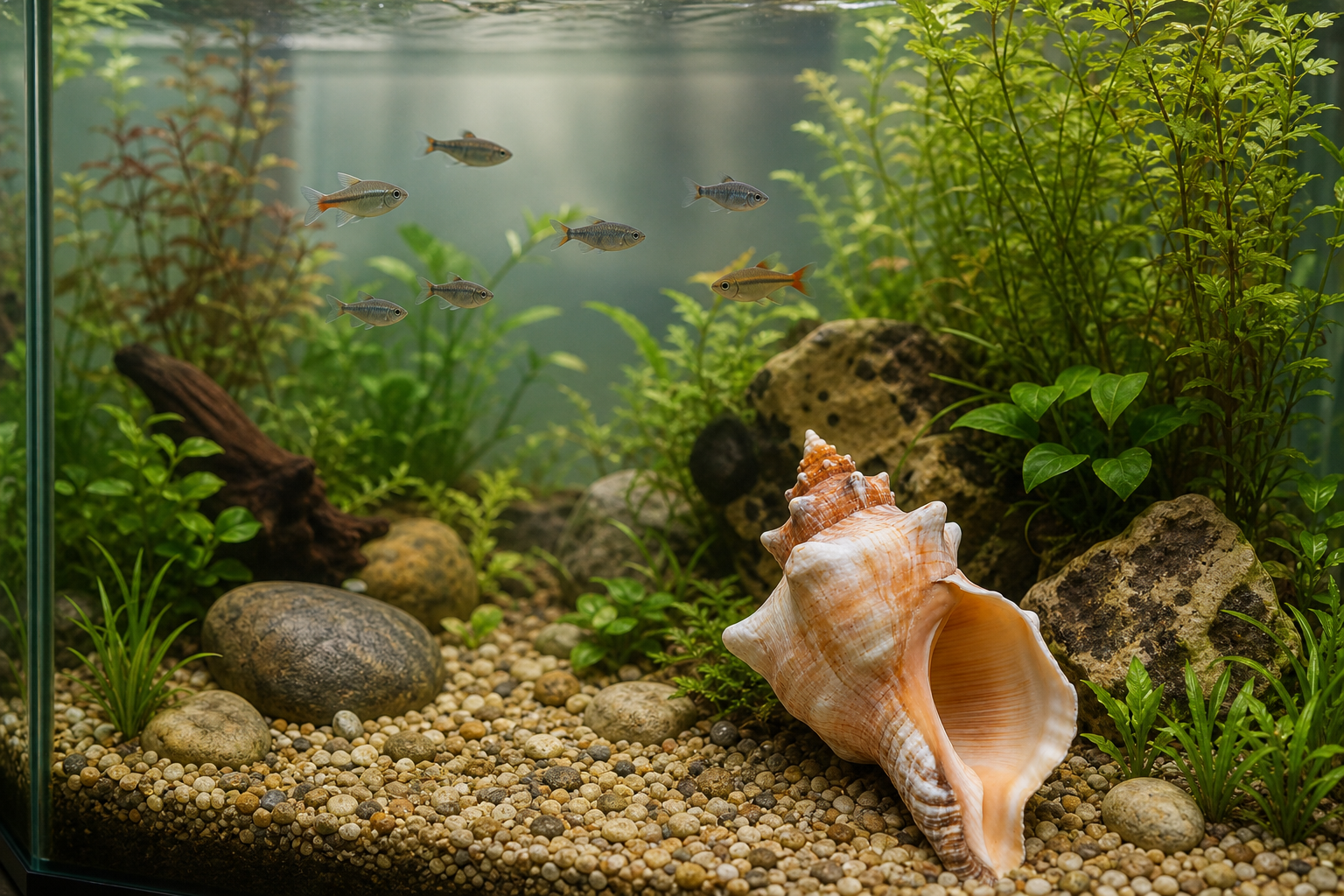
Rinse gravel or aquarium-safe sand before adding it to the tank. A simple natural layout can start with one neutral substrate, a few smooth aquarium-safe rocks, and one or two pieces of aquarium-safe wood or decor. Leave open swimming space in the front and create more height toward the back. Avoid sharp edges or items not intended for aquarium use.
Add Easy Live Plants
Live plants can make a beginner aquarium look more natural and can use some nutrients from fish waste. Start with a small number of forgiving plants instead of filling the tank at once. Plants that attach to hardscape, float near the surface, or root in the substrate can all work, depending on the light and your setup. Check each plant’s needs before buying, and remove damaged leaves as needed.
Cycle Before Adding Fish
The nitrogen cycle is the most important hidden part of a stable aquarium. Beneficial bacteria develop in filter media and on surfaces. They process waste so it is less likely to build up quickly. Run the filter, use a reliable aquarium test kit, and add fish only when the tank is ready. A local aquarium professional can help interpret results if you are unsure.
Choose a Small, Compatible Stocking Plan
Begin with fewer fish than you think you need. Choose species with similar temperature, water, and space requirements, and introduce them gradually. Overstocking can make water quality harder to manage. Feed small portions that fish can finish promptly, then remove leftovers.
Keep the Routine Simple
Plan on regular partial water changes instead of replacing all the water at once. Test water as needed, wipe algae from the glass, and gently siphon debris from the substrate. Rinse filter media only in removed aquarium water, not untreated tap water, so you do not disturb beneficial bacteria.
Common Mistakes to Skip
Do not add too many fish on day one. Do not rely on plants alone instead of testing water. Do not place the tank in strong sunlight, and do not clean every surface until it looks brand new. Stability matters more than a perfectly sterile aquarium.
A Calm Tank Starts Small
Build slowly, observe often, and make one change at a time. With a simple layout, compatible fish, live plants, steady filtration, and a consistent maintenance routine, your aquarium can become an enjoyable part of your home.
Shop this topic
Recommended pet essentials from this care path.


Next step
Move the reader into a relevant collection or product.
A strong pet article should bridge into commerce without breaking the editorial tone. Keep the call to action contextual and premium.